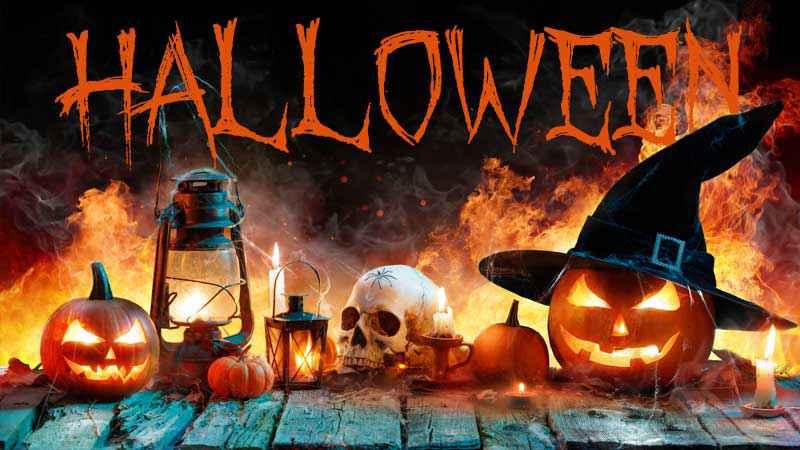
Can Christians Celebrate Halloween? Is It Really Pagan?
What the Bible Really Says About Halloween, Darkness, Witchcraft, and Pagan Customs
Every year on October 31, millions of people celebrate Halloween. Children dress in costumes, homes are decorated with ghosts, skeletons, witches, and monsters, and many people attend parties centered on dark and frightening themes. Most people see Halloween as harmless fun. But Christians who sincerely want to follow the Bible should ask a more important question: what does God say about Halloween?
Many believers have never examined where Halloween came from, what it represents, or why its symbols are so closely connected with death, fear, witchcraft, ghosts, demons, divination, and the occult. The issue is not whether a person intends to worship Satan. The issue is whether Christians should participate in customs that came from pagan religion and that celebrate the very things Scripture tells God's people to reject.
The Bible repeatedly tells believers to avoid evil, reject the works of darkness, refuse occult practices, and walk as children of light. This study is not written to condemn people who have participated in Halloween without understanding its background. It is written to help Christians examine the matter honestly, test tradition by Scripture, and make choices that honor Jesus Christ and protect their families.
Is Halloween Really a Pagan Holiday?
To understand Halloween, it is necessary to consider its roots. Halloween did not begin as a Christian observance. It developed from ancient pagan customs associated with Samhain, a festival connected with the changing of seasons, the dead, spirits, and supernatural fears. It has commonly been called a Festival of the Dead. Those who observed these customs believed that spirits could come near to the living during this time.
Many old Halloween practices grew from fear of spirits and attempts to protect oneself from them. People used costumes, masks, fires, frightening images, and other rituals connected with superstition. The carving of frightening faces into vegetables and later pumpkins was connected with efforts to ward off evil spirits. These are not biblical practices. They arose from pagan ideas about the dead, the spirit world, magic, and fear.
Witches and occult groups still recognize Samhain as an important observance. Some use the occasion for rituals involving divination, communication with spirits, and occult activity. Halloween may have become commercialized in modern society, but its central symbols remain the same: witches, ghosts, demons, death, skeletons, magic, spells, fear, and darkness.
God warned ancient Israel not to learn the religious ways of the nations around them. His people were not to copy the customs of pagan worship and then assume that the practice became acceptable because they gave it a different name.
Jeremiah 10:2 - "Do not learn the way of the heathen."
God is light, truth, holiness, purity, and life. Halloween glorifies darkness, death, fear, superstition, and the occult. Christians must ask themselves whether these two things belong together. Why would a follower of Jesus participate in a holiday built around the very things Scripture identifies with spiritual darkness?
What Do Satanists and Occult Leaders Say About Halloween?
The world often presents Halloween as a harmless time of costumes, candy, and entertainment. But people involved in witchcraft, occultism, and Satanism do not always view it that way. They often recognize Halloween as a spiritually important night connected with their beliefs and practices. That should at least cause Christians to stop, think, and examine what they are participating in.
Anton LaVey, founder of the Church of Satan, reportedly expressed pleasure that Christian parents allowed their children to take part in Halloween customs. He said that participating in the holiday, even through costumes and celebrations, symbolically gave honor to Satan. Whether people understand the spiritual meaning attached to the day or not, those committed to Satanism have openly embraced Halloween as their own.
Former Satanist John Ramirez has also warned that Halloween is not merely a night of innocent fun. He has stated that the holiday carries spiritual realities that many Christians do not recognize and that the kingdom of darkness views the night differently than the average family does.
Christians should never establish doctrine from the words of Satanists, occultists, or former occultists. The Bible alone is the authority for faith and practice. Yet when those involved in darkness openly identify a holiday with their beliefs, and rejoice when Christians join the celebration, believers should not dismiss the warning without examining Scripture.
Satan does not always make evil appear openly evil. He seeks to make darkness look amusing, harmless, fashionable, and fun. He disguises deception so that people will accept it without thinking.
2 Corinthians 11:14 - "Satan himself is transformed into an angel of light."
Christians belong to Jesus Christ. They are not called to join the customs of darkness, even when those customs have been softened, commercialized, or presented as family entertainment.
Ephesians 5:11 - "And have no fellowship with the unfruitful works of darkness, but rather reprove them."
Is Trick-or-Treating Harmless Fun?
Many Christian parents say, "We do not celebrate the scary parts. We just let the children dress up and get candy." Others choose a trunk-or-treat event at a church, believing that moving the activity to a church parking lot makes it acceptable. But the question is not simply whether candy is sinful, whether children enjoy costumes, or whether an event feels safe. The real question is whether participating in Halloween honors God.
Halloween has always been associated with wearing costumes, pretending to be something else, frightening images, superstition, spirits, witches, ghosts, demons, monsters, death, and fear. Modern costumes may include superheroes, animals, or fictional characters, but the event itself remains connected to a holiday whose central identity is darkness and the occult.
God tells His people not to imitate evil.
3 John 1:11 - "Beloved, follow not that which is evil, but that which is good."
Children and adults commonly dress as witches, demons, devils, zombies, ghosts, skeletons, vampires, and other dark characters. Even when people laugh about it, they are making entertainment out of images connected with evil, death, sorcery, and spiritual darkness. Christians should ask whether this is teaching children to love what God calls them to avoid.
The Bible also warns that believers cannot mix the worship of God with fellowship connected to demons.
1 Corinthians 10:21 - "Ye cannot drink the cup of the Lord, and the cup of devils: ye cannot be partakers of the Lord's table, and of the table of devils."
This does not mean that every child who receives candy is knowingly worshiping demons. It does mean that Christians must not casually blend the things of Christ with practices rooted in darkness. Calling something harmless does not change its spiritual foundation. Repackaging Halloween as trunk-or-treat, harvest fun, or a family event does not remove the question of whether Christians should participate in a holiday whose symbols and history are tied to paganism.
Does God Care What Christians Imitate?
Some people say, "We do not believe in witches, demons, or ghosts. We are only pretending." But God cares about what His people imitate, what they celebrate, and what they teach their children to enjoy. The Bible does not tell Christians to play with darkness as long as they claim not to believe in it.
Satan is the great deceiver. He presents himself as something good while remaining the enemy of God and mankind.
2 Corinthians 11:14 - "Satan himself is transformed into an angel of light."
Halloween promotes pretending to be something else. Often that means pretending to be a witch, a devil, a demon, a ghost, a zombie, or some other image of darkness. The Bible says Christians should put away the works of darkness and put on the armor of light.
Romans 13:12 - "Let us therefore cast off the works of darkness, and let us put on the armour of light."
God calls believers to put on Christ, not costumes that honor evil. He calls them to teach their children truth, not to make spiritual darkness entertaining. He calls them to be separate from the world's corrupt customs, not to join them because everyone else is doing it.
Read this again: God does not tell Christians to imitate darkness in a harmless way. He tells them to cast off the works of darkness. Halloween makes darkness into a celebration. God tells His people to reject it.
What Does the Bible Say About Witchcraft and the Occult?
Halloween is filled with images of witches, fortune-tellers, spells, ghosts, demons, psychic powers, and communication with the dead. These things are not harmless in the Bible. God repeatedly warns His people not to take part in witchcraft, sorcery, divination, mediums, spiritists, or attempts to contact the dead.
Leviticus 19:31 - "Regard not them that have familiar spirits, neither seek after wizards, to be defiled by them: I am the LORD your God."
Deuteronomy 18:10-12 - "There shall not be found among you any one that maketh his son or his daughter to pass through the fire, or that useth divination, or an observer of times, or an enchanter, or a witch... For all that do these things are an abomination unto the LORD."
God does not treat witchcraft as a joke. He does not say it is acceptable when used for entertainment. He calls it an abomination because it draws people away from Him and toward spiritual deception. God alone is the source of truth, protection, wisdom, and life. The occult tries to gain knowledge, power, guidance, or protection apart from God.
Micah 5:12 - "And I will cut off witchcrafts out of thine hand; and thou shalt have no more soothsayers."
Galatians 5:19-21 - "Now the works of the flesh are manifest... witchcraft... they which do such things shall not inherit the kingdom of God."
The early Christians understood that following Jesus required a complete break with occult practices. When people believed the gospel in Ephesus, they did not preserve their magic books for amusement. They destroyed them.
Acts 19:19 - "Many of them also which used curious arts brought their books together, and burned them before all men."
That example is powerful. People who turned to Christ did not ask how much of the occult they could safely keep. They removed it from their lives. If believers in the early church destroyed materials connected with magic, why should Christians today celebrate a holiday overflowing with images of witchcraft, spirits, demons, and occult power?
Does God Approve of Pagan Customs?
Some people argue that the origins of Halloween no longer matter because most people do not think about paganism when they participate. But God cares about what His people adopt, what they honor, and whether they mix pagan customs with their faith. Israel repeatedly fell into sin when they copied the religious practices of surrounding nations.
God condemned religious observances that were outwardly impressive but were not faithful to Him. The people had mixed corruption and disobedience into their worship, and God rejected it.
Isaiah 1:14 - "Your new moons and your appointed feasts my soul hateth: they are a trouble unto me; I am weary to bear them."
This verse does not mean that God hated His own holy days. It shows that God rejected religious observance when His people had corrupted it with sin and hypocrisy. God does not accept worship that combines His name with practices He condemns.
Halloween is not a festival commanded by God. It has no biblical foundation. It is built on customs connected with pagan religion, fear of the dead, and occult symbols. The Bible warns against adopting pagan customs and walking in the ways of those who do not know God.
Zephaniah 1:8 - "And it shall come to pass in the day of the LORD'S sacrifice, that I will punish the princes, and the king's children, and all such as are clothed with strange apparel."
Christians should not assume that a practice becomes holy merely because many churches, schools, neighborhoods, and families accept it. Popularity is not proof. Tradition is not proof. The only safe standard is the Word of God.
Can Light and Darkness Mix?
Many people try to divide Halloween into good parts and bad parts. They say they will avoid the worst costumes, skip horror movies, or leave out witches and demons. But can a holiday built around darkness be made spiritually clean by removing a few symbols? Can Christians participate in darkness while claiming to be children of light?
2 Corinthians 6:14 - "For what fellowship hath righteousness with unrighteousness? and what communion hath light with darkness?"
The answer is clear. Light and darkness do not mix. Christ and Satan do not mix. Truth and deception do not mix. Christians cannot celebrate evil one night and then claim that the celebration had no spiritual meaning.
God does not tell believers to keep only the pleasant parts of darkness. He tells them to reject every form of evil.
1 Thessalonians 5:22 - "Abstain from all appearance of evil."
Halloween celebrates fear, death, demons, ghosts, witchcraft, magic, superstition, and darkness. Even where those things are made into comedy or children's entertainment, the symbols remain. The Christian calling is not to make darkness friendly. It is to shine the light of Jesus Christ.
Matthew 5:14-16 - "Ye are the light of the world... Let your light so shine before men, that they may see your good works, and glorify your Father which is in heaven."
What Does It Mean to Resist Evil?
Halloween is often treated as a cultural event, but the Bible teaches that spiritual warfare is real. Satan is real. Demons are real. Deception is real. Christians are not called to fear Satan, because Jesus Christ has authority over all evil. But neither are they called to play with what God identifies as darkness.
1 Peter 5:8 - "Be sober, be vigilant; because your adversary the devil, as a roaring lion, walketh about, seeking whom he may devour."
The Bible says to be sober and vigilant. That means alert, watchful, and spiritually serious. It does not mean joining the world's celebration of evil, dressing children in occult costumes, or treating spiritual darkness as entertainment.
Ephesians 4:27 - "Neither give place to the devil."
Christians should not give Satan an opening in their homes, their minds, or the hearts of their children. This does not mean that a person who once celebrated Halloween is beyond God's mercy. Jesus forgives sin, delivers people from darkness, and gives them a new life. But once Christians understand the truth, they should be willing to turn away from practices that do not honor Him.
Jesus said that people loved darkness rather than light because their deeds were evil. The Christian response must be different. We are called to love the light, walk in the light, and lead our families toward the light.
John 3:19-20 - "And this is the condemnation, that light is come into the world, and men loved darkness rather than light, because their deeds were evil."
The question is not whether Halloween is popular. The question is whether it belongs in the life of someone who follows Jesus Christ. The Bible's answer is clear. Christians are called to reject pagan customs, expose darkness, resist evil, and be lights in a dark world.
Frequently Asked Questions
Is Halloween a pagan holiday?
Halloween developed from pagan customs associated with Samhain, a festival connected with the dead, spirits, superstition, and occult practices. Its most common symbols remain connected with witches, ghosts, demons, death, magic, and darkness rather than with biblical worship.
Should Christians participate in Halloween?
Christians should reject Halloween because Scripture tells believers not to imitate evil, participate in the works of darkness, adopt pagan customs, or involve themselves with witchcraft and occult themes.
Is trick-or-treating harmless fun?
Candy itself is not the issue. Trick-or-treating is part of a holiday rooted in pagan customs and commonly centered on costumes, fear, darkness, death, and occult images. Christians should ask whether participation honors God and teaches children to walk in the light.
What about church trunk-or-treat events?
Moving Halloween activity to a church parking lot does not change the biblical question. Christians should not assume that a pagan custom becomes acceptable simply because it is made family-friendly or held by a church.
What should Christians do instead of celebrating Halloween?
Christians can use the day to spend time with family, serve others, share the gospel, pray for their community, or simply avoid the celebration. The important matter is to choose what honors Jesus Christ rather than joining customs that glorify darkness.