The Lake Of Fire: Does The Bible Say We Live Forever In Hell?
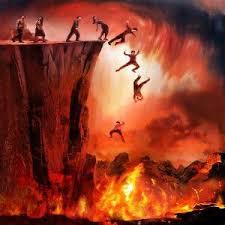
For centuries, Hell has been one of the most misunderstood subjects in Christianity. Many imagine a fiery underworld where demons torture lost souls forever. Others picture a lake of fire where the wicked burn endlessly in conscious agony. Still others believe Hell is simply separation from God, a state of spiritual emptiness.
But what does the Bible actually say?
Is Hell a place of everlasting life in torment, or eternal death? Do the wicked live forever in suffering, or do they cease to exist after judgment? Is Hell a realm of endless torture, or the place where God brings the wicked to a final, permanent end?
This study will examine what Scripture truly teaches, not tradition, not artwork, not medieval theology, but the inspired Word of God.
What Does the Bible Actually Teach About Hell?
In many religions and cultures, Hell is described as a place of punishment after death:
- Islam teaches that Hell (Jahannam) has multiple levels of suffering for sinners.
- Eastern religions often describe Hell as a temporary realm of purification before reincarnation.
- Judaism historically referred to Sheol, the grave, a shadowy place of the dead, not a fiery torture chamber.
- Traditional Christianity often portrays Hell as a physical location of eternal, conscious, fiery torment.
- Modern Christianity sometimes describes Hell as simply being “separated from God.”
But the Bible’s teaching is far more consistent and far more merciful than most people realize.
The Bible does not teach that humans live forever in Hell. It teaches that the wicked die forever in the Lake of Fire.
Does the Bible Teach Eternal Life in Hell?
Many Christians assume the wicked will live forever in torment. But Scripture says something very different:
“The gift of God is eternal life in Christ Jesus our Lord.” — Romans 6:23
Eternal life is a gift and it is only given to the saved.
The verse does not say:
- “The gift of God is eternal life in Hell.”
- “The wages of sin is eternal life in torment.”
It says:
“The wages of sin is death.”
Death is the opposite of life. Death is the cessation of existence. Death is not life in another location.
God does not give eternal life to the wicked. He gives them what He said He would give them: death.
“The Soul That Sins Shall Die”, Not Live Forever in Torment
Many people assume the soul is immortal. But the Bible says the opposite:
“The soul that sins shall die.” Ezekiel 18:4
Not “live forever in pain.” Not “exist eternally in fire.” Not “suffer without end.”
The soul that sins dies. Period.
This aligns perfectly with Jesus’ teaching:
“Fear Him who can destroy both soul and body in Hell.” — Matthew 10:28
God does not torture souls. He destroys them.
This is not cruelty, it is justice and mercy.
What Is the Second Death?
Every human being dies once:
“It is appointed for men to die once…” Hebrews 9:27
But the Bible also speaks of a second death:
“This is the second death, the Lake of Fire.” Revelation 20:14
The second death is not symbolic. It is not a metaphor. It is not eternal life in torment.
It is death, the final, permanent end of the wicked.
Revelation describes the final judgment:
“The dead were judged… Anyone not found written in the Book of Life was thrown into the Lake of Fire.” Revelation 20:12–15
These people are resurrected as physical human beings (Revelation 20:5). They stand before God. They are judged by their works. They are given the opportunity to accept Jesus Christ.
Those who reject God in absolute rebellion are thrown into the Lake of Fire and they die.
Malachi confirms this:
“The wicked… will be stubble. The day that is coming shall burn them up.” Malachi 4:1
Burned up, not preserved. Destroyed, not tormented forever. Consumed, not kept alive forever.
This is the second death.
What Do “Eternal Fire” and “Unquenchable Fire” Really Mean?
What Does “Eternal Fire” Mean?
Many assume it means humans burn forever. But the Bible uses the phrase differently.
“Sodom and Gomorrah… are set forth as an example, suffering the vengeance of eternal fire.” — Jude 1:7
Are Sodom and Gomorrah still burning today? No.
The fire was eternal in result, not duration. Its effects were permanent. The destruction was irreversible.
The same is true of Hell.
“Eternal fire” means:
- the fire is from God
- its purpose is final
- its results are everlasting
- the destruction cannot be undone
What Does “Unquenchable Fire” Mean?
Jesus spoke of “unquenchable fire” (Mark 9:43). Many assume this means fire that burns endlessly.
But in the Bible, “unquenchable” means:
- no one can put it out
- it consumes everything
Jerusalem’s trash dump — the Valley of Hinnom (Gehenna) — was an unquenchable fire. It burned continually because new waste was always added. But it did not burn forever.
Jesus used Gehenna as a metaphor for complete destruction, not torture in fire and brimstone forever.
Who Suffers Forever?
The Bible does describe eternal torment — but not for humans.
“The devil… the beast and the false prophet… will be tormented day and night forever and ever.” — Revelation 20:10
Hell — the Lake of Fire — is the eternal prison of:
- Satan
- the demons
- the Beast
- the False Prophet
These beings are immortal spirits. They cannot die. Therefore, their punishment is literally living forever in the Lake of Fire.
But humans are not immortal. They do not possess eternal life unless God gives it. And God gives it only to the saved.
The wicked do not live forever in Hell. They die forever in Hell.
Why Is Endless Torment Unbiblical?
The idea of conscious torment that last forever contradicts:
1. God’s Character
“God takes no pleasure in the death of the wicked.” — Ezekiel 33:11
“He desires all to be saved.” — 1 Timothy 2:4
2. Jesus’ Humanity
Jesus lived as a human for 33 years. He understands weakness and temptation.
“He was tempted in every way, yet without sin.” — Hebrews 4:15
3. The Meaning of Death
Death is the absence of life — not life in another form.
4. The Justice of God
Finite sins do not deserve infinite torture.
5. The Teaching of Scripture
The wicked:
- perish (John 3:16)
- are destroyed (Matthew 10:28)
- are burned up (Malachi 4:1)
- become ashes (Malachi 4:3)
- die the second death (Revelation 20:14)
Not one verse in the entire Bible says humans live forever in Hell. Not one.
Is Hell Literal Fire or Symbolic?
The Bible uses vivid imagery:
- fire
- brimstone
- gnashing of teeth
- outer darkness
Some of this may be symbolic. Some may be literal. But all of it points to the same reality:
Hell is the final destruction of the wicked — not their eternal preservation.
The suffering described in Scripture is real, but it is the suffering of:
- guilt
- judgment
- facing God
- realizing one’s fate
Not endless torture.
How Do People Escape Death in the Lake of Fire?
There is only one way: Jesus Christ.
“God so loved the world that He gave His only begotten Son, that whoever believes in Him should not perish but have eternal life.” — John 3:16
Notice the contrast:
- not perish
- have eternal life
Those are the two outcomes.
Revelation confirms this:
“Anyone not found written in the Book of Life was thrown into the Lake of Fire.” — Revelation 20:15
But Jesus came so you would not perish.
He came to save you from death — not to preserve you in torment.
Conclusion: Hell Is Eternal Death — Not Eternal Life in Torment
The Bible’s teaching is clear:
- The wicked do not live forever in Hell.
- They do not suffer endlessly.
- They do not possess eternal life in any form.
- They die the second death — permanently.
- Only Satan and his demons suffer eternally.
- Eternal life is a gift given only to the saved.
Hell is real. It is final. It is permanent. It is destruction — not preservation.
And Jesus Christ is the only escape.
(For a deeper explanation of salvation, see the Bible study: Why Should I Accept Jesus and Become a Christian?)
Choose life — not death. Choose Jesus — not the second death. Choose the Kingdom — not the Lake of Fire.
Frequently Asked Questions
1. Do humans live forever in Hell?
No. The Bible teaches that the wicked perish and die the second death. Eternal life is only for the saved.
2. What is the second death?
The second death is the final destruction of the wicked in the Lake of Fire, not eternal torment.
3. What does eternal fire mean?
Eternal fire refers to fire whose results are eternal, not fire that burns forever. Its destruction is permanent.
4. Who suffers eternal torment?
Only Satan, demons, the Beast, and the False Prophet — immortal spirit beings who cannot die.
5. How can someone escape Hell?
Through Jesus Christ, who offers eternal life to all who believe in Him and follow Him.
What the Bible Really Says About Other Vital Truths
- What the Bible Really Says About the Ten Commandments
- What the Bible Really Says About Eternal Security
- Why Today Is the Day of Salvation
- Should I Become a Christian?
- Is Satan God of this world?
About This Ministry & Legal Information
About Gateway to God Ministries
Gateway to God Ministries is a personal, Bible‑teaching outreach founded in 1997 by evangelist Anthony Joseph. This ministry is dedicated to helping people understand what the Bible truly says—clearly, faithfully, and without denominational traditions. It is fully self‑funded, does not sell anything, and has given away thousands of Bibles across America.
Learn more: About the Ministry
About the Author
Anthony Joseph is a seminary‑trained evangelist with 29 years of Bible‑teaching experience. He was trained for more than a decade by one of the top evangelists in America and has written over 90 in‑depth Bible studies. His teachings have reached millions of people around the world.
Learn more: About the Author
Legal Information
These pages explain how this ministry handles privacy, permissions, and the use of Bible study materials.
Gateway to God Ministries
Teaching what the Bible actually says since 1997
© 1997–2026 Gateway to God Ministries. All rights reserved.
Last updated: March 2026