Does Jesus Really Rapture the Church Before The Tribulation?
What do most Christians believe about a pre-tribulation rapture—and where did the idea come from?
If you ask the average Christian when Jesus will rapture the church, most will confidently answer, “Before the tribulation.” Many assume this is the historic teaching of the church, clearly stated in Scripture, and universally accepted by early Christians. But none of that is true. The idea of a pre‑tribulation rapture is actually very recent in church history, and it does not appear anywhere in the Bible. It is a tradition that has been repeated so often that many assume it must be biblical.
For nearly 1,800 years after Christ, no Christian writer, teacher, or theologian ever taught that the church would be secretly removed before the tribulation. Early believers expected persecution, endurance, and faithfulness through trials—not escape from them. Christ Himself said, “In the world ye shall have tribulation” (John 16:33). Paul said, “We must through much tribulation enter into the kingdom of God” (Acts 14:22). The consistent expectation of the early church was endurance, not evacuation.
The modern pre‑tribulation rapture doctrine began in the 1800s and spread rapidly through popular prophecy teachers, study Bibles, and Christian fiction. Over time, it became so widespread that many assumed it must be biblical. But tradition, no matter how popular, cannot override the clear teaching of the Bible. The question is not what Christians have assumed, but what Jesus actually said about the timing of the gathering of the elect.
Before we examine Paul, Revelation, or any “problem passages,” we must begin where all doctrine must begin—with the words of our Lord Himself. If Jesus places the gathering of the church after the tribulation, then no other interpretation can overturn His clear teaching. And as we will see in the next section, He speaks with unmistakable clarity.
What does Jesus Himself say about the timing of the gathering of the elect?
If we want to know when the church is gathered to Christ, we must begin with His own words. No doctrine can override His teaching, not tradition, not popular prophecy charts, not assumptions, and not interpretations of Paul or Revelation. Jesus is the One who returns, the One who gathers His people, and the One who describes the exact sequence of events. His teaching is the foundation upon which all other passages must be understood.
In Matthew 24, the disciples ask Christ a direct question: “What shall be the sign of thy coming, and of the end of the world?” (Matthew 24:3). He answers with a detailed, chronological explanation of events leading up to His return. He describes deception, persecution, false prophets, the abomination of desolation, and the great tribulation. Then He gives the timing of the gathering of the elect in unmistakable terms.
Jesus says, “Immediately after the tribulation of those days… then shall appear the sign of the Son of Man in heaven… and he shall send his angels with a great sound of a trumpet, and they shall gather together his elect” (Matthew 24:29–31). There is no ambiguity. He places the gathering of the elect after the tribulation. Not before it. Not in the middle of it. Not in a hidden, secret event. The gathering happens when He visibly returns in glory.
Notice the elements include: the sun and moon darkened, the sign of the Son of Man appearing, the tribes of the earth mourning, the angels sent forth, the great trumpet, and the gathering of the elect. These are global, visible, unmistakable events. Nothing about this resembles a secret or silent removal of the church. This is a public return witnessed by the entire world.
Some argue that Matthew 24 applies only to Israel, not the church. But Jesus never makes such a distinction. The disciples He was speaking to were the church. The elect He gathers are the same elect Paul speaks of. The trumpet Christ mentions is the same trumpet Paul mentions. The resurrection Christ describes is the same resurrection Paul describes. Scripture does not present two different gatherings—one for Israel and one for the church. There is one return of Christ, one resurrection of the righteous, and one gathering of the elect.
The Scripture teaching is clear: the church is gathered after the tribulation. Any doctrine that places the gathering before the tribulation directly contradicts the words of Christ. And as we will see in the next section, Paul’s teaching perfectly aligns with Him, not with the modern pre‑tribulation theory.
Does Paul teach a pre-tribulation rapture in his letters to the church?
Many Christians assume Paul taught something different, that while Jesus placed the gathering of the elect after the tribulation, Paul supposedly revealed a new mystery in which the church is taken before it. But Paul never contradicts Jesus. In fact, Paul repeatedly affirms the exact same sequence Christ gave. When we read Paul’s words carefully, without forcing modern assumptions into the text, his teaching aligns perfectly with Christ.
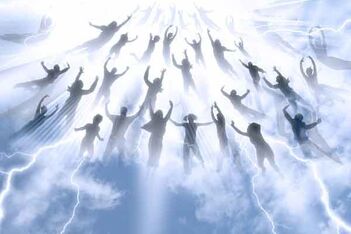
The most well‑known passage about the rapture is 1 Thessalonians 4:16–17: “For the Lord himself shall descend from heaven with a shout, with the voice of the archangel, and with the trump of God: and the dead in Christ shall rise first: then we which are alive and remain shall be caught up together with them in the clouds, to meet the Lord in the air.” Nothing in this passage suggests a secret or early removal of the church. It describes a loud, visible, global event—exactly like Jesus described in Matthew 24.
Notice the elements Paul includes: the Lord descending, a mighty shout, the voice of an archangel, the trumpet of God, the resurrection of the dead, and the catching up of the living saints. These match Jesus’ description point for point. He said the angels gather the elect with a great trumpet. Paul says the Lord descends with the trumpet of God. He said the gathering happens after the tribulation. Paul never says otherwise.
Paul gives even more detail in 1 Corinthians 15:51–52: “We shall not all sleep, but we shall all be changed, in a moment, in the twinkling of an eye, at the last trumpet.” The resurrection and transformation of believers happen at the last trumpet—not at a trumpet before the tribulation, not at a mid‑tribulation trumpet, and not at a secret trumpet heard only by the church. The last trumpet is the final trumpet in God’s prophetic sequence.
If the resurrection happens at the last trumpet, and Jesus places the gathering of the elect after the tribulation with a great trumpet, then they are describing the same event. There is no room for a pre‑tribulation rapture unless we ignore Christ's words and redefine Paul’s trumpet to mean something else entirely.
Paul also warns believers not to be deceived about the timing of Christ’s return. In 2 Thessalonians 2, he says the coming of Christ and our gathering to Him will not happen until after the falling away and the revealing of the man of sin. These events occur during the tribulation, not before it. Paul’s message is consistent: the church will see the tribulation, endure it, and be gathered to Christ at His visible return.
Far from teaching a pre‑tribulation escape, Paul reinforces Jesus’ timeline. The resurrection, the trumpet, the gathering, and the return of Christ all occur together—after the tribulation. In the next section, we will examine the “last trumpet” more closely and see how it connects directly to the book of Revelation.
What is the “last trumpet,” and why does it prove the rapture is post-tribulation?
Paul says the resurrection and transformation of believers happen “at the last trumpet” (1 Corinthians 15:52). This single phrase is devastating to the pre‑tribulation theory. If the resurrection occurs at the last trumpet, then there cannot be another trumpet after it. The last trumpet is final. It is the end of the sequence. And Scripture tells us exactly when that trumpet sounds.
In the book of Revelation, God reveals a series of seven trumpets that unfold during the tribulation. These trumpets are not symbolic—they are specific, sequential events that culminate in the return of Christ and the establishment of His kingdom. When the seventh trumpet sounds, loud voices in heaven proclaim, “The kingdoms of this world are become the kingdoms of our Lord, and of his Christ” (Revelation 11:15). This is the moment Christ takes His rightful rule over the earth.
Revelation 11:18 adds that at the sounding of the seventh trumpet, “the time of the dead, that they should be judged” has arrived. This is the resurrection. This is the moment Paul described. This is the moment Jesus described when He said the angels gather the elect with a great trumpet. The last trumpet of Paul is the seventh trumpet of Revelation. They are the same event described from different angles.
Pre‑tribulation teachers often claim that Paul’s trumpet is different from the trumpets in Revelation. But Paul never says his trumpet is unique. He simply calls it the last trumpet. If Revelation contains a series of trumpets and the seventh is the last, then Paul’s trumpet must be the seventh. Anything else would require redefining the word “last” to mean something other than last.
Christ places the gathering of the elect after the tribulation with a great trumpet. Paul says the resurrection happens at the last trumpet. Revelation shows the last trumpet sounding at the end of the tribulation when Christ returns to reign. All three passages align perfectly. There is no contradiction. There is no secret earlier trumpet. There is no pre‑tribulation gathering. The trumpet that raises the dead and gathers the saints is the final trumpet of God’s prophetic sequence.
When we allow Scripture to interpret Scripture, the conclusion is unavoidable: the rapture occurs at the last trumpet, after the tribulation, at the visible return of Jesus Christ. In the next section, we will examine whether the Bible ever describes a secret or invisible rapture—and why that idea cannot be found anywhere in God’s Word.
Does the Bible ever describe a secret, invisible, or silent rapture?
The idea of a secret, invisible, or silent rapture is one of the most widespread assumptions in modern Christianity—but it is completely absent from Scripture. Not one verse describes Jesus coming quietly, secretly removing believers, or snatching the church away while the world continues on unaware. Every biblical description of Christ’s return is loud, visible, global, and unmistakable.
Paul says the Lord descends “with a shout,” “with the voice of the archangel,” and “with the trump of God” (1 Thessalonians 4:16). Nothing about this is silent. Nothing about this is hidden. A shout, an archangel’s voice, and the trumpet of God are not secret signals heard only by believers—they are declarations that shake the world. Jesus said His coming would be like lightning flashing across the sky, visible from east to west (Matthew 24:27). Lightning is not secret. It is seen by all.
Jesus also said that “all the tribes of the earth” will see the Son of Man coming in the clouds of heaven with power and great glory (Matthew 24:30). This is not a private event. It is a global revelation. Revelation 1:7 says, “Every eye shall see him.” Not some eyes. Not only believers. Every eye. The return of Christ is a public, world‑shaking event that no one can miss.
Some point to the phrase “one shall be taken, and the other left” (Matthew 24:40–41) as evidence of a secret rapture. But Jesus gives the context: “As the days of Noah were, so shall also the coming of the Son of Man be” (Matthew 24:37). In Noah’s day, who was taken? The wicked were taken in judgment. Who was left? Noah and his family were left alive. Jesus is not describing a secret removal of believers. He is describing sudden judgment on the unprepared.
Others point to Jesus coming “as a thief in the night.” But Scripture explains what this means. A thief comes unexpectedly—not invisibly. Paul says the day of the Lord comes as a thief to the world, but “ye are not in darkness, that that day should overtake you as a thief” (1 Thessalonians 5:4). Believers are not surprised. They are watching. They are ready. The thief imagery refers to timing, not secrecy.
The Bible never describes a secret rapture. It describes a glorious, visible return of Christ with angels, trumpets, resurrection, and the gathering of the elect. The secret rapture theory exists only in modern tradition—not in the Word of God. In the next section, we will examine commonly misunderstood passages and see how they fit perfectly into Jesus’ timeline.
How do commonly misunderstood passages fit into Jesus’ timeline?
Many Christians sincerely believe the Bible teaches a pre‑tribulation rapture because of a handful of verses that seem, at first glance, to support the idea. But when these passages are read in context and compared with the clear teaching of Jesus and Paul, every one of them fits perfectly into the post‑tribulation timeline. None of them contradict Jesus’ words. None of them describe a secret or early gathering. And none of them place the church’s hope before the tribulation.
One of the most misunderstood passages is “one shall be taken, and the other left” (Matthew 24:40–41). Many assume the one “taken” is raptured. But Jesus gives the context: “As the days of Noah were…” (Matthew 24:37). In Noah’s day, who was taken? The wicked were taken in judgment by the flood. Who was left? Noah and his family were left alive. Jesus is not describing believers being secretly removed. He is describing sudden judgment on the unprepared. The ones “taken” are taken in destruction, not in a rapture.
Another commonly cited verse is Revelation 3:10, where Jesus promises to “keep thee from the hour of temptation.” Pre‑trib teachers claim this means the church will be removed before the tribulation. But the Greek phrase “keep from” (tēreō ek) means to guard, protect, or preserve through—not remove from. Jesus used the same phrase when He prayed that the Father would “keep them from the evil” (John 17:15). The disciples were not removed from the world; they were protected in it. Revelation 3:10 promises protection, not evacuation.
Some point to Jesus’ words, “I go to prepare a place for you” (John 14:2–3), as evidence that believers must go to heaven before the tribulation. But Jesus does not say when believers will enter the place He prepares. He simply says He will come again and receive His people to Himself. Revelation 21 shows that the prepared place—the New Jerusalem—comes down out of heaven to the earth. Jesus brings the prepared place with Him when He returns. This fits perfectly with the post‑tribulation gathering.
Others cite Paul’s statement that believers are “not appointed to wrath” (1 Thessalonians 5:9). This is absolutely true—but wrath and tribulation are not the same thing. Jesus said, “In the world ye shall have tribulation” (John 16:33). Paul said, “We must through much tribulation enter into the kingdom of God” (Acts 14:22). Tribulation is what the world and Satan inflict on believers. Wrath is what God inflicts on the wicked. Believers are protected from God’s wrath, but they are not promised escape from tribulation. The church is gathered after the tribulation, before God’s wrath is poured out.
When each of these passages is read in context, none of them support a pre‑tribulation rapture. Instead, they harmonize perfectly with Jesus’ clear teaching: the church will endure the tribulation, remain faithful through it, and be gathered to Christ at His visible return. In the next section, we will see why this truth matters—and why understanding the timing of the rapture strengthens, rather than weakens, the hope of every believer.
Why does the timing of the rapture matter for Christians today?
Some believers say, “Does it really matter when the rapture happens? Isn’t it enough just to know that Jesus is coming back?” While it is true that our ultimate hope is Christ Himself, the timing of the gathering matters because Jesus taught it, Paul reinforced it, and Scripture warns repeatedly against deception in the last days. Truth matters. Doctrine matters. And what we believe about the rapture shapes how we prepare for the future.
If we believe the church will be removed before the tribulation, we may be unprepared for the trials Jesus said would come upon all the world. Jesus warned that many would fall away, many would be offended, and many would be deceived during the tribulation (Matthew 24:9–13). A false expectation of escape can lead to spiritual collapse when persecution arrives. But if we believe what Jesus actually taught—that the church will endure the tribulation and be gathered at His visible return—we will be strengthened, not shaken.
The timing of the rapture also matters because it affects how we understand the nature of God’s wrath. Scripture distinguishes between tribulation (what the world inflicts on believers) and wrath (what God inflicts on the wicked). Believers are not appointed to wrath, but they are called to endure tribulation. Understanding this distinction protects us from confusion and fear. It also helps us see the beauty of God’s justice: He preserves His people through trial and delivers them before His wrath is poured out.
Most importantly, the timing of the rapture matters because Jesus expects His people to believe His words. He said the gathering of the elect happens “immediately after the tribulation.” He said His coming would be visible, global, and unmistakable. He said His angels would gather His people with a great trumpet. He said deception would be widespread. To reject His timeline is to elevate tradition above Scripture.
The truth is not discouraging—it is empowering. God will strengthen His people. He will preserve them. He will gather them. And He will return in glory to establish His kingdom. The hope of the believer is not escape from tribulation but victory through Christ. As Jesus said, “He that shall endure unto the end, the same shall be saved” (Matthew 24:13).
With the foundation now laid, we can summarize the key questions believers ask about the rapture and provide clear, Scripture‑based answers. The following FAQ section brings together the most common concerns and shows how each one fits into the timeline Jesus gave.
Frequently Asked Questions
Does Jesus rapture the church before the tribulation?
No. Jesus clearly places the gathering of the elect after the tribulation in Matthew 24:29–31.
What does Jesus say about the timing of the gathering?
Jesus says the angels gather the elect “immediately after the tribulation” with a great trumpet.
Does Paul teach a pre-tribulation rapture?
No. Paul says the resurrection happens at the last trumpet, which occurs after the tribulation.
What is the “last trumpet”?
The last trumpet is the seventh trumpet of Revelation, which sounds at Christ’s visible return.
Does the Bible ever describe a secret rapture?
No. Every description of Christ’s return is loud, visible, global, and unmistakable.
What the Bible Really Says About Other Vital Truths
- What the Bible Really Says About the Soul
- What the Bible Really Says About Heaven
- What the Bible Really Says About the Rapture
- What the Bible Really Says About Hell
- Is God’s Judgment On America For Our Sins?
About This Ministry & Legal Information
About Gateway to God Ministries
Gateway to God Ministries is a personal, Bible‑teaching outreach founded in 1997 by evangelist Anthony Joseph. This ministry is dedicated to helping people understand what the Bible truly says—clearly, faithfully, and without denominational traditions. It is fully self‑funded, does not sell anything, and has given away thousands of Bibles across America.
Learn more: About the Ministry
About the Author
Anthony Joseph is a seminary‑trained evangelist with 29 years of Bible‑teaching experience. He was trained for more than a decade by one of the top evangelists in America and has written over 90 in‑depth Bible studies. His teachings have reached millions of people around the world.
Learn more: About the Author
Legal Information
These pages explain how this ministry handles privacy, permissions, and the use of Bible study materials.