Gateway To God Ministries Presents - What The Bible Really Says
Many sincere Christians wonder which day God wants His people to honor. Some worship on Saturday, others on Sunday, and many have never studied the question at all. But God is not the author of confusion. The Bible gives a clear and consistent picture of the Sabbath from Genesis to Revelation. When we look at Scripture instead of tradition, the truth becomes simple and powerful.
Most people assume the Sabbath began with Moses, but the Bible shows it began long before Israel existed. The Sabbath starts in the very first week of human history. Genesis 2:3 says God blessed the seventh day and sanctified it. This happened before sin, before Israel, and before the Ten Commandments. God rested, God blessed the day, and God set it apart. No other day in Scripture receives these three actions.
Jesus confirmed this when He said, “The Sabbath was made for man” (Mark 2:27). He did not say it was made for Jews or for Israel. He said it was made for mankind. It is a creation gift for all people. Even before the Ten Commandments were given, God expected Israel to honor the 7th day. In Exodus 16, the people were told not to gather manna on the seventh day. This was before Sinai, proving the Biblical day of rest was already known and already holy.
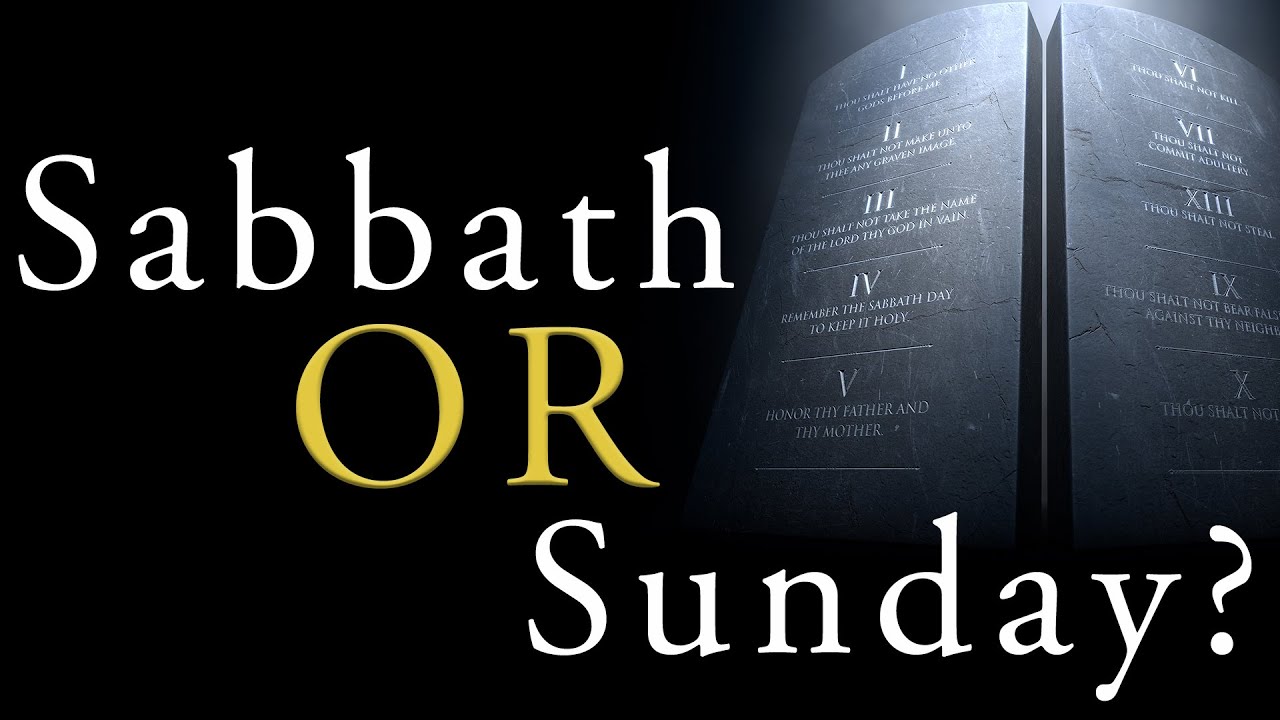
When God gave the Ten Commandments, He did not introduce a new Sabbath. He reaffirmed the one He created at the beginning. The fourth commandment begins with the word “Remember,” because God knew people would forget it. The command includes four parts: remember the Sabbath, keep it holy, rest from work, and honor God as Creator. The reason for God's weekly time of rest is creation itself. Exodus 20:11 says God made heaven and earth in six days and rested the seventh day.
The Sabbath command is rooted in God’s character, God’s authority, and God’s design for humanity. Nothing in the Ten Commandments suggests the day of rest would ever change. The Ten Commandments are universal, moral, and eternal. They are not temporary or ceremonial. They reflect God’s unchanging nature.
Jesus kept God's weekly time of rest perfectly. Luke 4:16 says it was His custom to keep the Sabbath. He taught on the Sabbath, healed on it, and worshiped on it. But He also corrected the Pharisees’ man‑made rules. Jesus never changed the Sabbath. He never moved it. He never canceled it. Instead, He said He is “Lord of the Sabbath” (Mark 2:28). You cannot be Lord of something that no longer matters.
Jesus also said the Sabbath was made for mankind, not for Jews alone. And in Matthew 24:20, Jesus told His disciples to pray their flight would not be on the Sabbath. This prophecy points to events forty years after the cross. Jesus expected His followers to still honor this special day long after His resurrection.
Yes. Every example we have shows the apostles kept the 7th day rest long after Jesus rose from the dead. Acts 17:2 says Paul kept the Sabbath “as his custom was.” Acts 18:4 says he reasoned in the synagogue every Sabbath. In Acts 13:42, Gentiles begged Paul to preach to them the next Sabbath. If Sunday had replaced it, Paul would have said, “Come tomorrow—the Lord’s Day.” But he didn’t. He waited until the next Sabbath.
The New Testament gives even more evidence that the apostles continued to honor the seventh‑day Sabbath long after Jesus ascended to heaven. In Acts 13:44, nearly the entire city gathered on the Sabbath to hear the word of God. This was not a Jewish‑only gathering. Gentiles were present and eager to hear the gospel. If it had been replaced by Sunday, this would have been the perfect moment for Paul to correct them. Instead, he preached again on the seventh‑day.
Acts 16:13 shows Paul seeking a place of prayer on the Sabbath outside the city gate. This was his pattern wherever he traveled. The Biblical time of rest was not a local custom tied to one region. It was a universal practice for believers across the Roman world. In Acts 18:11, Paul remained in Corinth for a year and a half, teaching the word of God. During that time, he continued to meet with believers on the 7th day.
Some point to Acts 20:7 as evidence of Sunday worship, but the passage describes a special evening meeting that took place on the first day of the week, which according to biblical timekeeping began at sunset on Saturday. This was not a weekly worship service. It was a farewell gathering before Paul traveled the next morning. Nothing in the passage suggests a change to Sunday.
Likewise, 1 Corinthians 16:2 is often misunderstood. Paul instructed believers to set aside offerings “on the first day of the week,” but this was done privately at home, not in a church service. There is no command to worship on Sunday. There is no suggestion that the Sabbath had been replaced. The New Testament consistently shows believers honoring the seventh‑day while also gathering at other times as needed.
Sunday worship did not come from the Bible. It came from tradition. The Bible never commands Sunday worship. There is no verse that says, “Keep Sunday holy,” or “The day of rest is now the first day.” Early Christians met on what we call Saturday. Sunday gatherings began as voluntary meetings and later became official under Roman influence. The shift to Sunday was a man‑made change, not a biblical one.
The shift did not come from Jesus or the apostles. It developed gradually as the early church faced pressure from Roman culture. By the second and third centuries, some Christians began meeting on Sunday to distinguish themselves from Jews during times of persecution. Over time, these voluntary gatherings were elevated by church leaders, and eventually Sunday was declared a day of rest by Roman civil law under Emperor Constantine in AD 321.
This change was never based on Scripture. It was based on tradition and political convenience. Jesus warned that human traditions can make the commandments of God of no effect (Mark 7:7–9). Paul warned that a falling away would come and that believers must hold fast to the teachings delivered by the apostles (2 Thessalonians 2:3, 15). The move to Sunday is one of the clearest examples of this drift.
The Bible repeatedly warns that God’s people must not follow the customs of the nations (Jeremiah 10:2) or conform to the world (Romans 12:2). The Sabbath stands as a sign between God and His people (Ezekiel 20:12, 20). It identifies those who honor God’s authority above human tradition. When we keep the Sabbath, we declare that God—not culture—determines what is holy.
Some believe the 4th commandment as specifically given by God ended at the cross, but the Bible teaches the opposite. The New Covenant writes God’s law on the heart (Hebrews 8:10). Jesus said He did not come to destroy the law (Matthew 5:17). Paul said the law is holy, just, and good (Romans 7:12). The seventh day rest is part of the Ten Commandments, and the Ten Commandments are God’s eternal moral law.
The Biblical rest is not ceremonial. It is not temporary. It is rooted in creation and written by God’s own finger. The New Covenant does not erase God’s law. It internalizes it. Hebrews 4 explains that the 7th day rest points to the spiritual rest believers find in Christ. This does not replace the weekly day of rest. Instead, it deepens its meaning. Just as God rested from His works, we rest in the finished work of Christ. God's weekly time of rest becomes a reminder that salvation is by grace, not by our own efforts.
Hebrews 4:9 says, “There remains therefore a rest for the people of God.” The Greek word for “rest” here is sabbatismos, meaning “a Sabbath‑keeping.” This shows that Sabbath observance continues for God’s people under the New Covenant. The Sabbath is not a shadow that disappeared. It is a living reminder of God’s creation, redemption, and future kingdom.
Jesus also used Sabbath healings to reveal the heart of God. He healed a man with a withered hand (Mark 3:1–5), a crippled woman (Luke 13:10–17), and a man with dropsy (Luke 14:1–6). These miracles show that the Sabbath is a day for restoration, compassion, and mercy. Jesus said, “It is lawful to do good on the Sabbath” (Matthew 12:12). God's weekly time of rest is not a burden. It is a day for blessing others and experiencing God’s goodness.
First of all it is not a burden. It is a blessing. It is a day of rest, worship, renewal, and delight. It reminds us that God made us, God saved us, God sustains us, and God will restore us. It is a weekly reminder of the gospel. It points to creation, redemption, and the future kingdom. It teaches us to trust God. It teaches us to slow down, to rest, and to remember who God is. It is a gift from a loving Creator.
Many Christians want to honor God’s special day but are not always sure how to keep it in a practical, meaningful way. The Bible gives simple principles that help us enjoy the blessing of the Sabbath as God intended. Exodus 20:8–10 teaches us to rest from work. Exodus 31:15 calls the Sabbath “holy to the LORD.” Jeremiah 17:21–22 warns against carrying burdens or turning the day into ordinary labor. The principle is clear: the day of rest really is a day of rest and spiritual focus.
God also instructed His people to prepare ahead of time so the Sabbath could be restful. In Exodus 16:22–23, the people prepared food on the day before the Sabbath. This teaches us to plan meals and chores in advance so the day can be peaceful. Friday is often called the “Preparation Day” (Mark 15:42). Simple meals like fruit, cereal, sandwiches, salads, or reheated dishes work well. Light reheating does not violate the principle of avoiding labor‑intensive cooking.
Isaiah 58:13–14 reminds us to call the Sabbath a delight and to honor God by turning away from our own pleasures. It is not about entertainment or distraction. It is a day to focus on God, family, fellowship, and spiritual renewal. Colossians 3:2 encourages us to set our minds on things above. The day helps us reset our priorities and draw closer to God.
Restful activities that honor the Sabbath include reading the Bible, spending time with family, sharing a simple meal, fellowshipping with believers, praying, journaling, visiting someone who is sick or lonely, enjoying nature, or listening to uplifting music. These activities refresh the body and spirit while keeping our focus on God.
Scripture also warns against buying, selling, and business activities on the 7th day. Nehemiah 13:15–17 rebukes those who sold goods on the Sabbath. Nehemiah 10:31 shows God’s people agreeing not to buy or sell on that day. The principle is clear: avoid shopping, business transactions, and eating out. Even though restaurant workers are employed by others, they still end up working for you when preparing and serving your food. Emergency situations are rare exceptions, but they should not become a habit.
The Sabbath is a gift, a weekly opportunity to rest, reconnect with God, and step away from the pressures of daily life. By avoiding work, preparing ahead, choosing restful activities, and keeping our focus on God, we honor His will and experience the blessing He intended. When in doubt, choose what draws you closer to God, not what distracts from Him.
The Bible is clear. The Sabbath began at creation. It was made for mankind. It is the seventh day. Jesus kept it. The apostles kept it. The early church kept it. It will be kept in the new earth. God never changed the Sabbath. Man changed it to Sunday. The biblical Sabbath is Saturday, the seventh day.
Christians who want to follow Scripture—not tradition—will honor the day God blessed, sanctified, and commanded. The Sabbath is not a burden. It is a gift from God to His people.
Yes. it was established at creation, affirmed in the Ten Commandments, kept by Jesus, kept by the apostles, and remains for God’s people under the New Covenant (Hebrews 4:9). Nothing in Scripture changes it to Sunday.
No. There is no verse where Jesus, the apostles, or the early church changed it to Sunday. Every biblical example shows them keeping the seventh‑day rest long after the resurrection.
No. Jesus said it was made for man (Mark 2:27), meaning all humanity. It was created before Israel existed and will be kept by all nations in the future kingdom (Isaiah 66:22–23).
Scripture teaches that it is a day of rest from work, buying, selling, and ordinary labor (Exodus 20:8–10; Nehemiah 13:15–17). It is a day to focus on God, worship, fellowship, and spiritual renewal.
By preparing ahead, resting from work, avoiding business activity, choosing uplifting and spiritual activities, worshiping God, spending time with family, and calling the day a delight (Isaiah 58:13–14).
Gateway to God Ministries is a personal, Bible‑teaching outreach founded in 1997 by evangelist Anthony Joseph. This ministry is dedicated to helping people understand what the Bible truly says—clearly, faithfully, and without denominational traditions. It is fully self‑funded, does not sell anything, and has given away thousands of Bibles across America.
Learn more: About the Ministry
Anthony Joseph is a seminary‑trained evangelist with 29 years of Bible‑teaching experience. He was trained for more than a decade by one of the top evangelists in America and has written over 90 in‑depth Bible studies. His teachings have reached millions of people around the world.
Learn more: About the Author
These pages explain how this ministry handles privacy, permissions, and the use of Bible study materials.

Gateway to God Ministries
Teaching what the Bible actually says since 1997
© 1997–2026 Gateway to God Ministries. All rights reserved.
Last updated: March 4, 2026